Project Note
EkNepal: A First Attempt at Building Around Uncertainty
- Type
- Professional project
- Role
- Frontend contributor
- Organization
- Alpinist Studios
- Status
- Public product
- Source
- Proprietary — not published
- Link
- eknepal.com
Abstract
EkNepal is a news-aggregation platform that brings reporting from multiple Nepali publications into a single interface. It was my first paid programming project. I contributed to the frontend while working through Alpinist Studios. This note is a short retrospective on the product, my contribution to it, and what the experience changed about how I approach unclear problems.
1.The Question
Could you get truthful information?
Open a handful of Nepali news sites in a row and you get a handful of different accounts of the same country — the same event described differently, or reported by one outlet and missed entirely by the next. Nothing was necessarily wrong; there was just no single place that put the coverage side by side and let a reader compare it. That gap — not a bug, not a feature request, just a genuinely fuzzy problem — was the starting point for EkNepal.
2.The Product
EkNepal is a Nepali-language news reader that pulls reporting from several distinct outlets — among them Himalaya Times and News of Nepal — into one continuously updating feed, each item clearly attributed to its source publication. Articles carry share links (email, Facebook, X, Viber, WhatsApp) and a comment section, and the site is built mobile-first, with dates rendered in the Bikram Sambat calendar alongside a live weather readout. Beyond news, it bundles a set of everyday utilities Nepali readers commonly look for alongside their news — foreign-exchange rates, share-market figures, a horoscope, a date converter, a Unicode converter, and gold and silver pricing — organised behind a single navigation drawer.
EkNepal is a product built and maintained by a team; it is not something I built alone, and I did not build its backend, its news-ingestion pipeline, or any fact-checking or source-classification system.
3.My Contribution
I contributed to the frontend of EkNepal through Alpinist Studios — the part that turned scattered reporting from multiple outlets into something a reader could actually navigate, read, and compare. It was my first paid software engineering work, and the first time code I wrote shipped to real users rather than a course instructor.
4.Figures
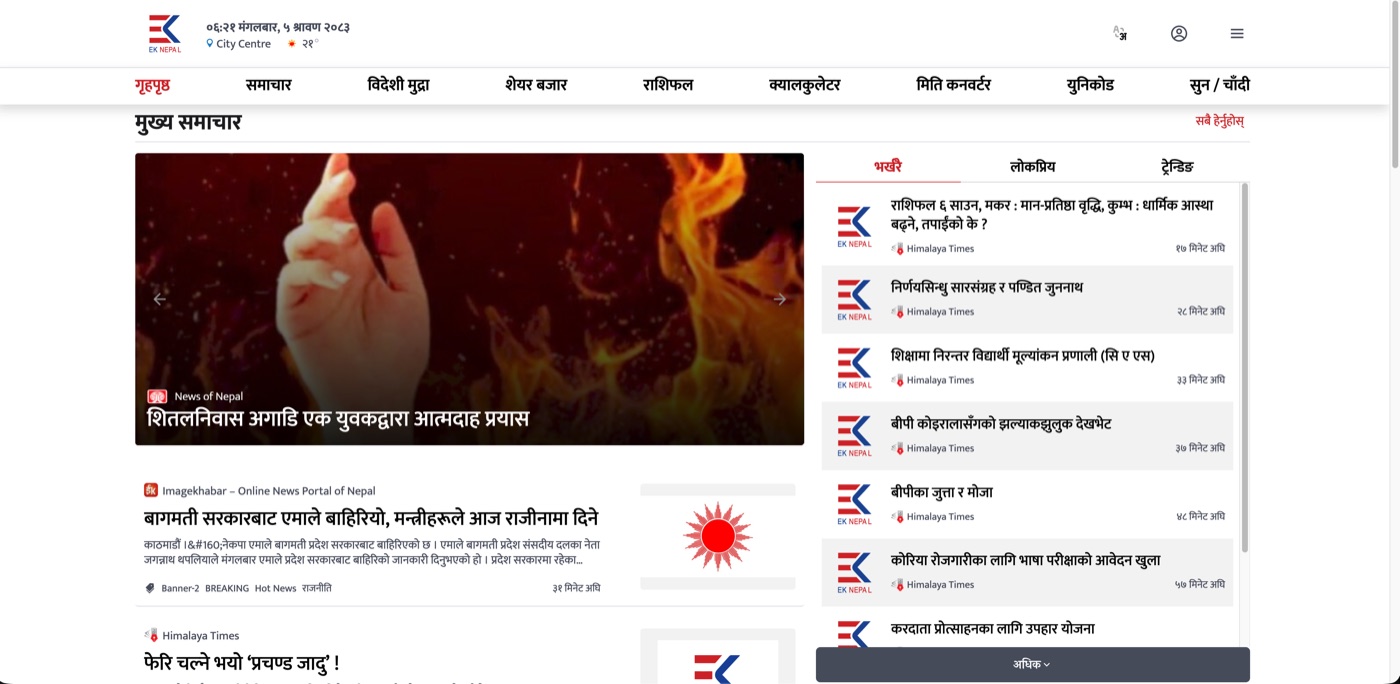
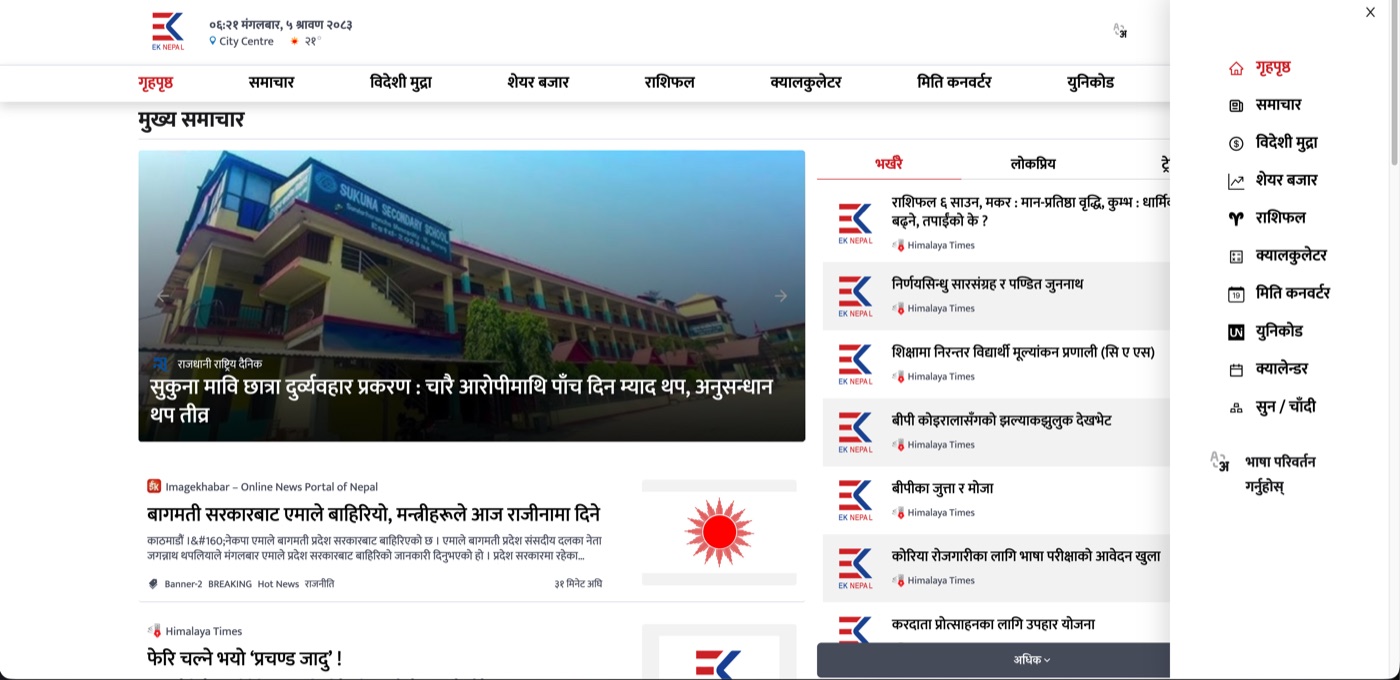
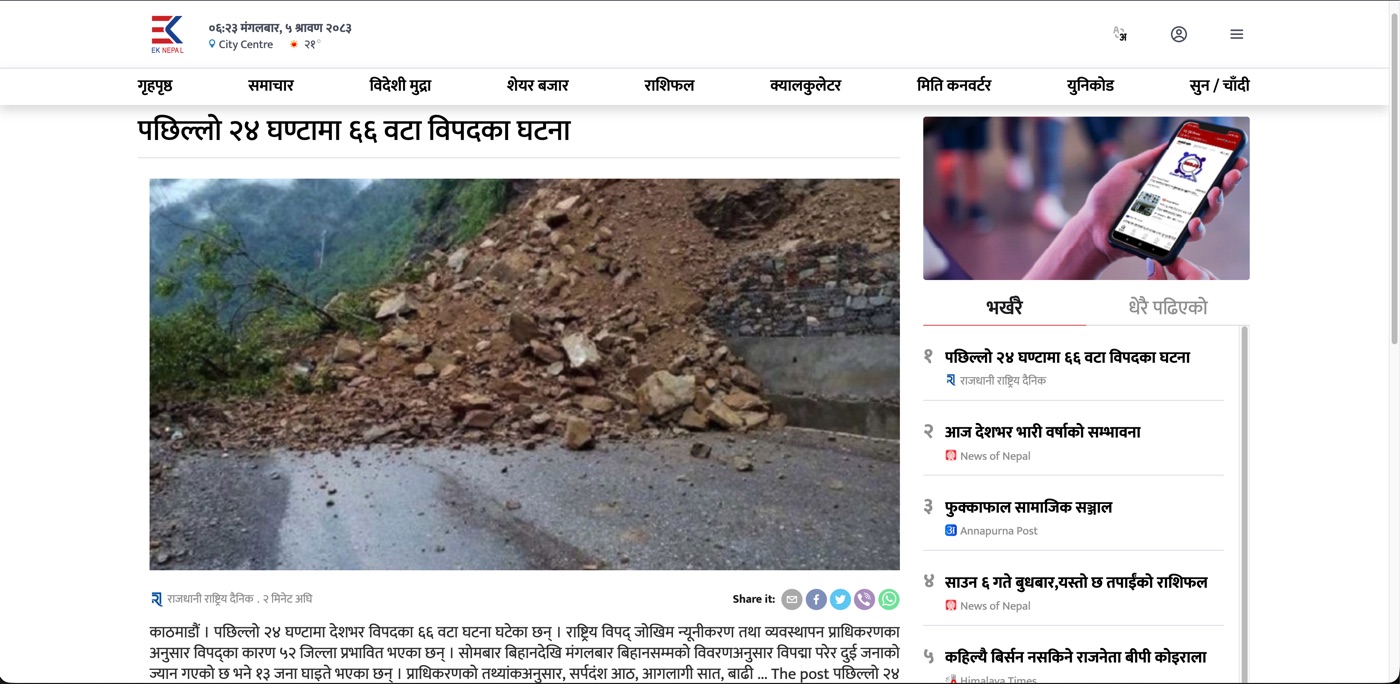
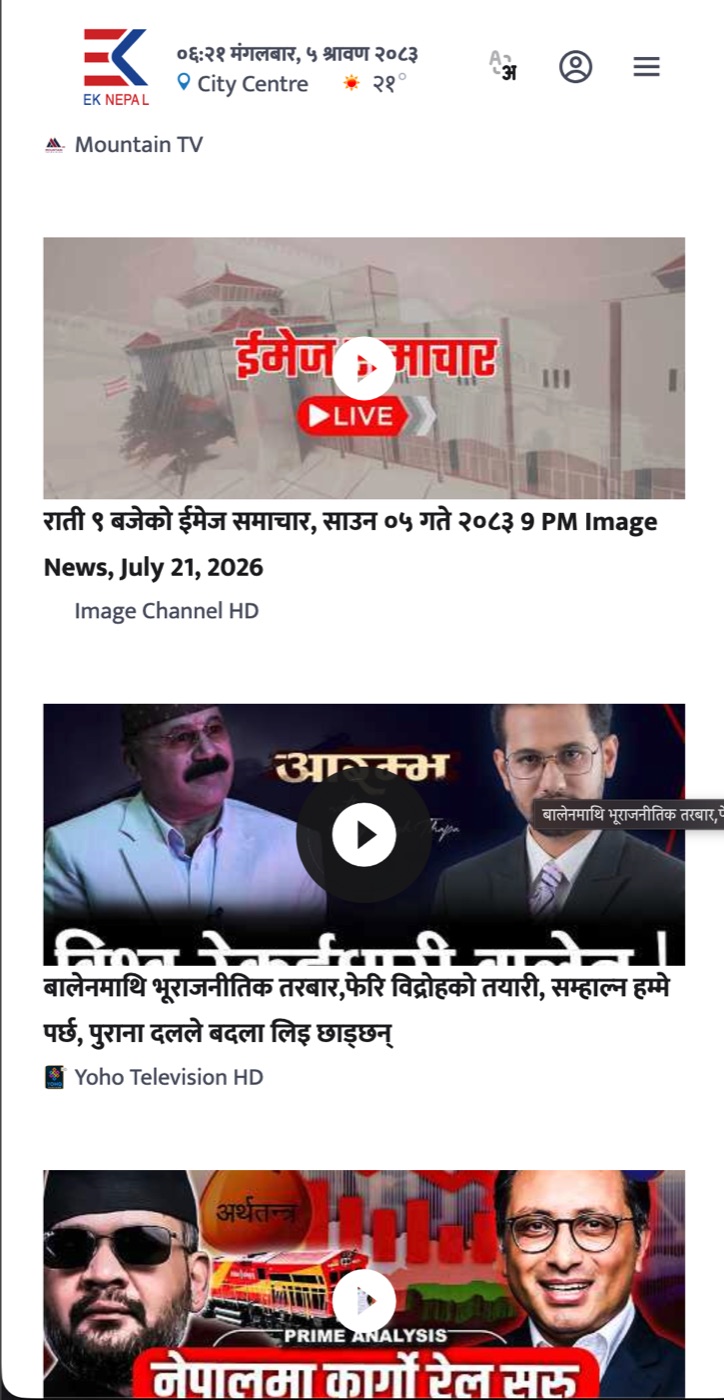
5.Reflection
The habit EkNepal left me with wasn't a framework or a library — it was a way of starting: begin with a question that doesn't have a clean shape yet, break it into pieces small enough to actually build, ship something testable, and see what survives contact with real use. That's the same loop I now run on algorithms and proofs — state the conjecture, try small cases, build the smallest thing that could be wrong, and let the evidence tell you where the structure actually is.
If truth rarely arrives in one piece, why do we keep accepting it from a single source?